
Rebuilding a heart, restoring a life
When the music paused, heart team helped Ray Bailey find his rhythm again
Reviewed by: Joshua Grimm, M.D., Ray and Mickie Bailey
Written by: Lily Vining
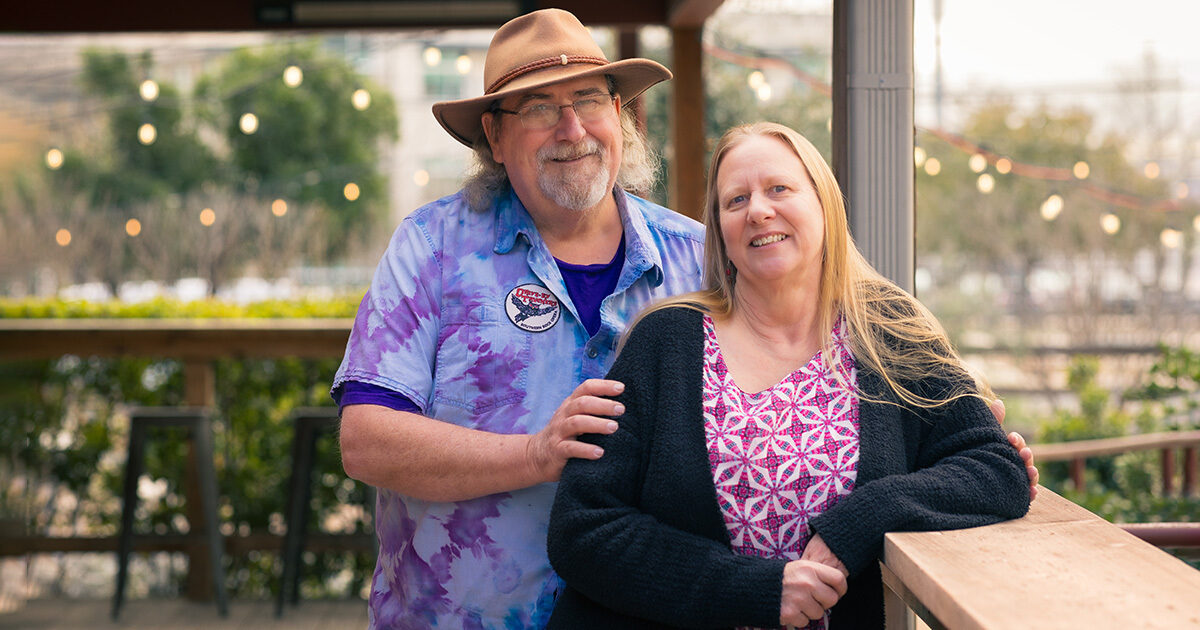
Ray Bailey had just begun the kind of retirement he’d always imagined — road trips in the camper van with his wife, Mickie, and a calendar full of bluegrass festivals. But during a trip to the Ozarks, he began feeling dizzy and disoriented.
“He wasn’t making sense,” Mickie recalls. “That’s when I knew this wasn’t something we could wait out.”
Within days, the Baileys learned that a rare and aggressive heart infection had taken hold, attacking the artificial valve Ray had received years earlier and spreading through the surrounding tissue of his heart. What followed was an incredibly complex surgery, performed by cardiothoracic surgeon Joshua Grimm, M.D., and the heart team at the Institute for Cardiovascular Health, a clinical partnership between Ascension Seton and UT Health Austin. With this kind of highly specialized care available close to their home in Luling, Bailey is back to walking daily and planning his next concert.
“This kind of surgery requires more than technical skill,” Grimm says. “It takes an entire heart team working in sync before, during and after the operation.”
A sudden turn
Bailey had undergone an aortic valve replacement years earlier and had been living an active, full life. But what he did not know was that a serious bacterial infection had entered his bloodstream, attached itself to the artificial valve and begun spreading through his heart.
By the time he reached emergency care, the infection had caused small strokes and damaged multiple heart structures. Doctors quickly realized this was no ordinary case.
“This kind of infection is aggressive and unforgiving,” Grimm says. “Once it involves the valve and surrounding tissue, surgery is often the only option.”
After being stabilized out of state, Bailey was transferred back to Central Texas and referred to UT Health Austin.
A high-risk surgery and human connection
The operation Grimm recommended is known as a “commando” procedure, which requires removing infected tissue, replacing multiple valves and reconstructing the connective structures that hold the heart together.
“It’s essentially rebuilding part of the heart,” Grimm explains. “You have to remove everything the infection touched and create a new foundation.”
Bailey underwent surgery on Halloween. The operation lasted hours and pushed the limits of what the body, and the surgical team, could endure.
“I remember Dr. Grimm coming out and telling us he’d used every trick he knew,” Mickie says. “He was honest. He was exhausted. But that made us trust him even more.”
Throughout the process, the Baileys felt supported not just by Grimm, but by the entire care team, including Maureen Cleary, MSN, APRN, a nurse practitioner who checked in daily, answered questions and made sure nothing fell through the cracks.
“She made us feel like we weren’t alone,” Mickie says. “That mattered more than she’ll ever know.”
And then there was the music.
During early conversations, Bailey and Grimm discovered they shared a love for bluegrass and Americana. Grimm often plays music in the operating room, and Bailey recommended one of his favorite bands, the Kitchen Dwellers.
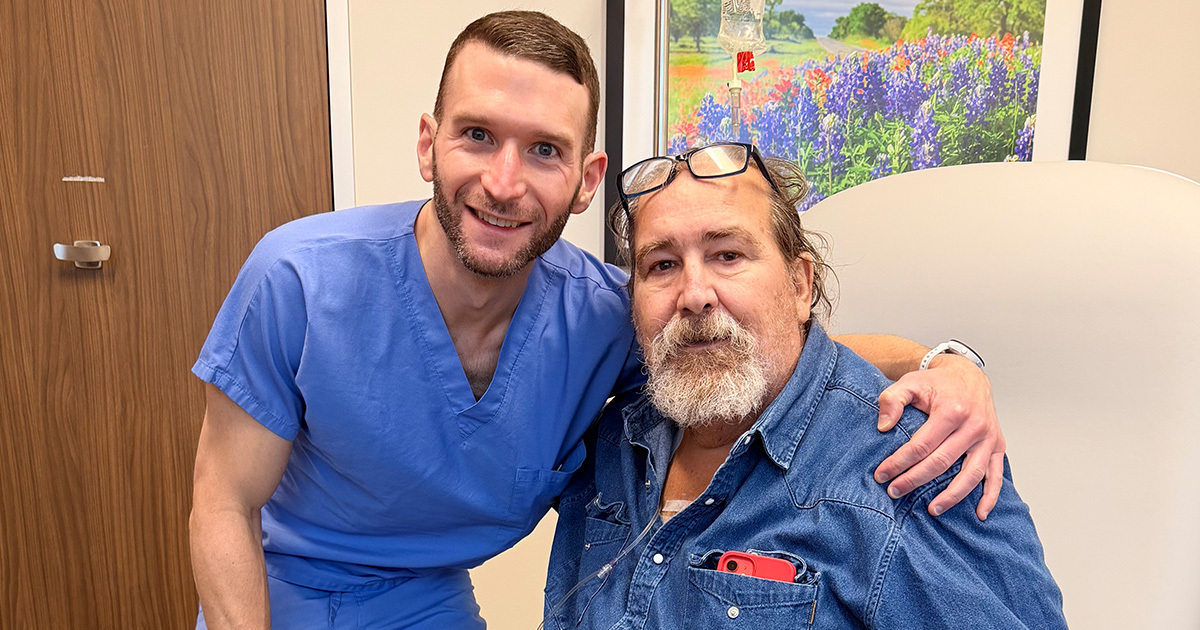
“He told me, ‘This is going to be a long surgery — I hope they have a lot of music,’” Bailey laughs. “That connection stuck with us.”
Recovery and renewal
Against the odds, Bailey recovered. He avoided major neurological complications and his kidney function returned. Within two weeks of surgery, he was discharged home.
Rehabilitation followed, where Bailey relearned balance, rebuilt strength and regained endurance. Now, he is back to daily activity and attending cardiac rehabilitation. Most importantly, he’s back to live music. The couple has tickets to see the same band that played during his surgery — a full-circle moment they don’t take lightly.
“Music carried us through this,” Mickie says. “In ways we never expected.”
The power of team-based heart care
For Grimm, Bailey’s story reflects what’s possible when highly specialized care is delivered through an integrated, patient-centered model.
“This wasn’t about one person,” he says. “It was surgeons, nurses, intensivists and rehabilitation specialists, all aligned around the same goal.”
For Bailey, the outcome is simpler and more profound.
“They didn’t just fix my heart,” he says. “They gave me my life back. They gave me more time with the things I love.”
And for the Baileys, that means getting back on the road with a renewed appreciation for every beat.