
Advanced lung care, close to home
Written by: Lily Vining
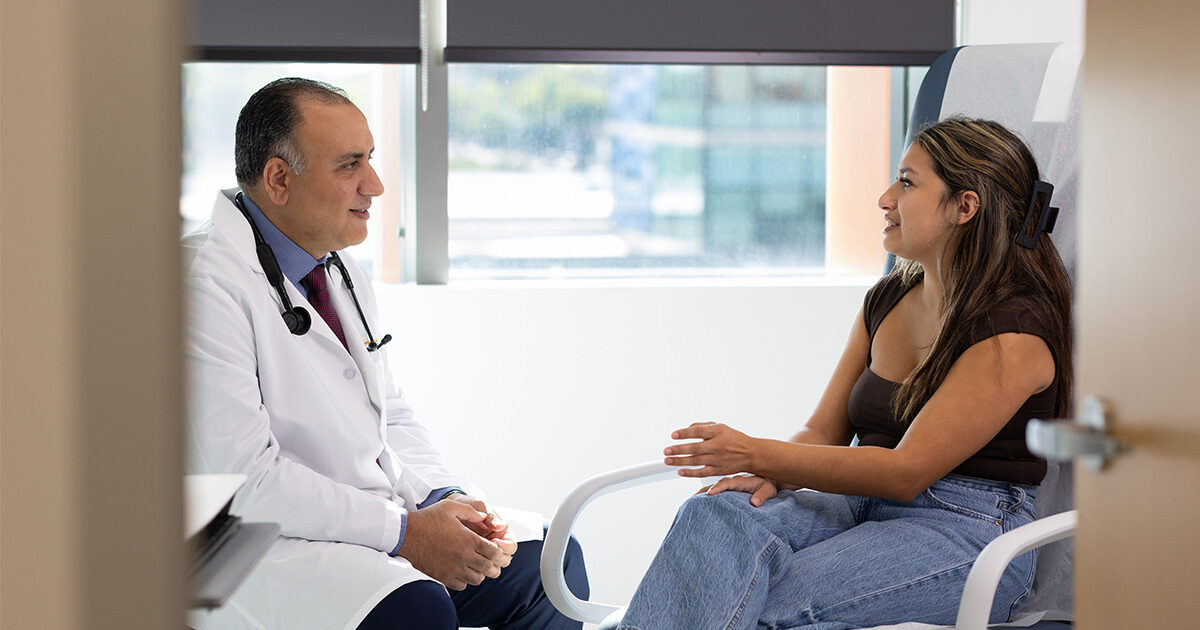
For years, patients in Central Texas with complex lung conditions often had to travel to other cities for specialized care. Now, that’s changing.
At UT Health Austin, the Pulmonology Clinic is expanding access to highly specialized care, bringing together experts focused on specific lung conditions and delivering coordinated, patient-centered treatment closer to home.
“We realized there were key areas of pulmonary care that simply weren’t available in Austin,” says Mehdi “Matt” Mirsaeidi, M.D., board-certified pulmonologist and chief of the Division of Pulmonology and Critical Care for Dell Medical School’s Department of Internal Medicine. “Our goal has been to build those programs here so patients can receive the care they need without leaving their community.”
Specialized care for a new era of pulmonology
Pulmonary medicine is evolving rapidly, and with it, the way care is delivered. As treatments become more advanced, from biologic therapies for asthma to targeted treatments for interstitial lung disease, care has become increasingly specialized.
“Pulmonary in general has become more specialized over time,” explains Elizabeth Rosenthal, M.D., a pulmonologist specializing in breathing problems caused by neuromuscular disorders. “As treatments become more advanced, it’s no longer one physician treating everything. You need clinicians who focus deeply on specific conditions.”
That shift is reflected in how the clinic is structured. Rather than a general pulmonary model, each physician focuses on a specific area, allowing for more precise diagnoses, more personalized treatment plans and better long-term outcomes.
Expertise across complex conditions
This approach allows the team to care for a wide range of complex and often underdiagnosed lung conditions, from interstitial lung disease and bronchiectasis to advanced asthma, COPD and neuromuscular disorders that affect breathing.
Many of these conditions require highly specialized evaluation and ongoing management. Some, like ILD, can cause scarring in the lungs that worsens over time without early treatment. Others, like bronchiectasis, may go undiagnosed for years, leading to repeated infections and declining lung function.
“These conditions are considered complex when symptoms remain poorly controlled despite standard treatments,” says Trisha Parekh, D.O. “Our approach is highly individualized — we look closely at each patient’s disease pattern, triggers and underlying causes to tailor care that evolves with them.”
By bringing together expertise across these areas, the team can provide more accurate diagnoses, more targeted therapies and better long-term support for patients.
Detecting lung cancer earlier
The team also offers lung cancer screening for patients at higher risk, using low-dose CT scans to detect cancer early, often before symptoms appear.
“Finding cancer at an early stage gives patients more treatment options and a better chance at a cure,” says Rumi Khan, M.D.
Screening is a personal decision made in partnership with a physician, based on each patient’s health and risk factors.
A coordinated approach to complex lung care
What sets the Pulmonology Clinic apart is not just its range of expertise, but how that care is delivered.
The team emphasizes coordinated, multidisciplinary care, often working with specialists across disciplines to better understand each patient’s condition and develop a comprehensive plan.
Patients also benefit from longer visits and more frequent touchpoints when needed.
“For many of our patients, especially those with complex or chronic conditions, care isn’t one-size-fits-all,” Mirsaeidi says. “We focus on quality over quantity, spending the time needed to truly understand and manage each case.”
Bringing advanced lung care closer to home
For patients, access to specialized pulmonary care close to home can have a meaningful impact. It can lead to earlier diagnoses, more effective treatments and fewer hospitalizations, especially for those managing chronic or progressive conditions. In many cases, it also reduces the burden of traveling long distances for care, allowing patients to stay closer to their support systems.
Ultimately, the goal is simple: to provide the level of care patients need, when and where they need it.
“As an academic medical center, we’re bringing together expertise, research and patient care in one place,” Mirsaeidi says. “That allows us to deliver a higher level of care for our community and to continue improving how we treat complex lung disease.”